How to Buy Land in Bali. Complete Guide for Foreign Investors
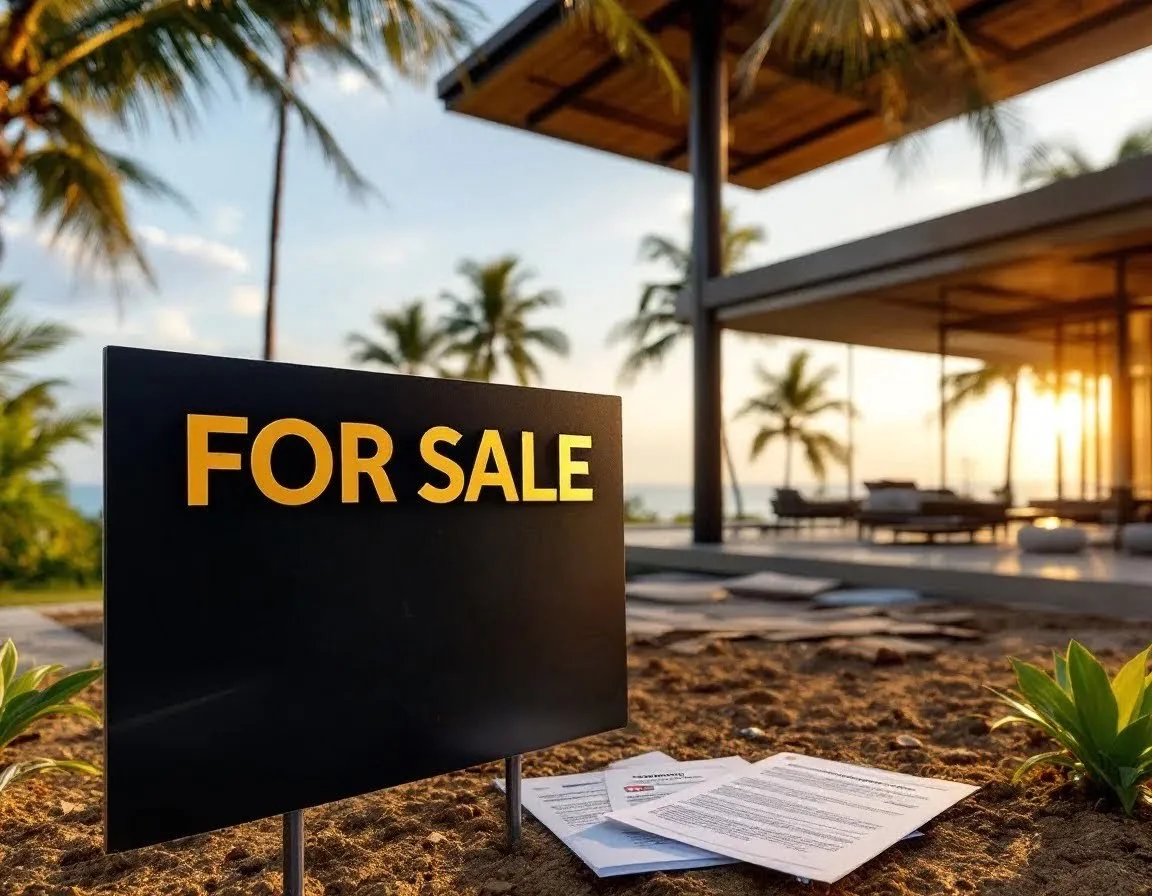
Investing in land in Bali is a process that demands both capital and a sophisticated strategic approach encompassing legal, cultural, and market considerations. For investors focused on long-term capitalization and risk minimization, methodical and considered decision-making at every stage is paramount.
Legal Framework and Zoning System
A fundamental aspect is a thorough understanding of the legal framework and zoning regulations. Foreign investors are legally prohibited from owning land outright under a freehold title. However, secure and well-established mechanisms exist, such as a long-term leasehold agreement or the Right to Build title (Hak Guna Bangunan, or HGB) acquired through a foreign-owned company (PT PMA).
Integral to this process is the zoning system, which dictates the designated use of a plot:
- Red and Pink Zones – the most secure and liquid asset, permitting construction of commercial properties and their subsequent legal operation for both short-term and long-term rentals
- Yellow Zone – primarily intended for private residential construction, where commercial activities may be restricted
- Green Zone – protected conservation area. It is CRITICAL to avoid investing in green zones; any construction here is deemed illegal and carries the risk of total asset loss without compensation
Strategic Location Selection
The strategic choice of location directly influences both the asset's value and its potential return on investment. Established markets such as Canggu, Ubud, and Uluwatu demonstrate consistently high demand but also command premium prices, reaching between 8 to 20 million Indonesian Rupiah per are (100 square meters).
Increasingly, investors are turning their attention to areas with high growth potential:
- The developing coastline from Seseh to Tanah Lot
- The eastern coast around Virgin Beach
- North Bali, particularly the Lovina area, where the construction of a new international airport is anticipated
However, it is crucial to understand that an unusually low price, such as up to IDR 800,000 per are in remote areas, often indicates high risks related to the land's legal status or a lack of essential infrastructure.
Land Acquisition Process
The acquisition process is multi-stage and includes negotiations, where success hinges not only on the financial offer but also on an appreciation for local culture and engagement with the local community council (banjar). Retaining an experienced local representative provides a significant advantage. I perform this negotiation professionally for both individual investors and developers on the island.
Once an agreement on the price is reached, the immediate next step is to place a deposit through an authorized notary. This secures the investor's position in a highly competitive market and initiates the most critical phase: comprehensive due diligence.
This procedure must include:
- A meticulous audit of ownership titles, especially in cases of inherited family land
- Verification of zoning compliance and building coefficients
- Confirmation of the legality of all contractual agreements
Tax and Administrative Components
A final, yet crucial, element of planning involves accounting for the tax and administrative components of the transaction:
- The landowner is typically responsible for paying the income tax, which is approximately 10% of the transaction value
- The investor covers the notary fees, amounting to about 1% of the value
Understanding this cost structure allows for negotiations to be framed in a way that achieves mutually beneficial terms and provides a clear forecast of the total investment. This comprehensive and disciplined approach is the cornerstone of a successful and secure entry into Bali's real estate market.
Prices and Investment Potential of Bali's Key Zones for 2025–2026
For investors considering Bali, it is essential to understand not only the general trends but also the specific characteristics of each area. Below is a comprehensive list of locations, grouped by their geographic and investment potential. The price ranges shown reflect leasehold ownership terms of 25–30 years.
1. South Bali: The Epicenter of Demand and Premium Investments
This region remains the most expensive and sought-after thanks to its developed infrastructure, proximity to the airport, and oceanfront access.
| Location | Average Price per Are (USD) | Investment Potential & Insights |
|---|---|---|
| Seminyak / Kerobokan | $54,000 – $150,000+ | Premium stability. A mature market ideal for commercial properties |
| Canggu (Berawa, Batu Bolong) | $72,000 – $133,000+ | Trend epicenter. The most popular area among expats and digital nomads |
| Pererenan / Seseh | $39,000 – $75,000 | The New Canggu. Rapidly developing with higher potential for capital growth |
| Cemagi / Mengwi | $25,000 – $55,000 | Next expansion wave. Attractive for ocean or rice-field views |
| Bukit Peninsula (Uluwatu) | $48,000 – $100,000 | Luxury & surf hub. Experiencing a boom in high-end villa development |
| Jimbaran / Ungasan | $24,000 – $60,000 | Family & logistics hub. Close to the airport and white-sand beaches |
| Nusa Dua / Tanjung Benoa | $60,000 – $110,000 | Five-star resort zone. Stable but less dynamic growth |
| Sanur | $45,000 – $90,000 | Calm sophistication. Ideal for long-term investments |
2. Central Bali: Spirituality, Nature & Culture
The island's heart attracts yoga, art, and wellness enthusiasts.
| Location | Average Price per Are (USD) | Investment Potential & Insights |
|---|---|---|
| Ubud (Center & Surroundings) | $30,000 – $80,000 | Spiritual capital. Consistent demand for villas and retreat centers |
| Tegallalang / Payangan | $9,000 – $25,000 | Scenic landscapes. Promising for eco-tourism and glamping |
| Tabanan (Central Area) | $15,000 – $40,000 | Authenticity and nature. Great potential for peaceful hospitality projects |
3. West Bali: Untouched Nature & New Horizons
The least developed region, attracting investors playing the long game.
| Location | Average Price per Are (USD) | Investment Potential & Insights |
|---|---|---|
| Balian / Pupuan | $8,000 – $20,000 | Surfer's hideaway. Growing as a quieter alternative to Canggu |
| Medewi / Pekutatan | $6,000 – $15,000 | Pristine coastline. Among the most affordable beachfront land |
| Gilimanuk / West Bali National Park | $4,000 – $12,000 | Gateway to Java. Potential for eco-tourism |
4. North Bali: The Next Growth Frontier
With the newly announced international airport, this region is rapidly transforming into one of Bali's most promising long-term investment areas.
| Location | Average Price per Are (USD) | Investment Potential & Insights |
|---|---|---|
| Lovina / Singaraja | $6,000 – $25,000+ | Anticipating a leap. New airport. Huge potential for hotels and villas |
| Munduk / Buyan & Tamblingan Lakes | $5,000 – $18,000 | Cool mountain retreat. Perfect for eco-lodges, glamping, and retreats |
| Tejakula / Northeast Coast | $7,000 – $20,000 | Diving & tranquility. Attractive for niche wellness and dive resorts |
5. East Bali: Authenticity & Diving Paradise
This region retains its original charm, appealing to those seeking the real Bali.
| Location | Average Price per Are (USD) | Investment Potential & Insights |
|---|---|---|
| Amed / Tulamben | $6,000 – $18,000 | Diving world capital. Stable market for small hotels and dive centers |
| Candidasa / Virgin Beach | $12,000 – $30,000 | Hidden gem. Emerging as a quieter alternative to the south |
| Sidemen / Karangasem | $4,000 – $15,000 | Valley of kings. Potential for boutique hotels and agro-tourism |
| Islands (Nusa Lembongan, Ceningan, Penida) | $20,000 – $70,000 | Island paradise. Vast growth potential but infrastructure still developing |
Related Articles
Indonesia's 2026 Banking Reform and Its Impact on Bali's Real Estate Market
Indonesia's 2026 banking reforms end informal deals and bring transparency to Bali. Learn how new regulations are attracting institutional investors and protecting your capital.
Bali Construction Freeze: What Investors Need to Know for Q4 2025
Bali's real estate market faces a 'hard reset' in late 2025. Learn how new construction rules and permit freezes affect your investment safety.